Create.
Post.
Hope.
Too many aspiring entrepreneurs, marketers, and small business owners take this approach to digital marketing…
All they see are tumbleweeds.
But it’s not necessarily your fault.
You’ve been led down the garden path by big promises and ambitious estimates of what social media can achieve for your business.
Unfortunately… the powerful world of social media that has revolutionized the way we live our lives is not solely dedicated to helping grow your business. People aren’t out there waiting with bated breath for your next post just so they can hand over their credit card.
With more and more businesses breaking out into the digital sphere, competition to get your target customers attention is fierce.
If you give them a reason to ignore you… they will.
You see, social media is just a platform. It’s not a magic bullet or masterful new employee that is going to turn your business around overnight.
With the right mindset, advice, tools, and testing, it does provide an ecosystem that is custom-built for scaling your message. It’s the fuel to your fire. The playground for your entrepreneurial dreams.
It’s a platform to find your tribe, talk to them, understand their wants, needs, and desires, and grow a business of meaning and passion.
But if you’re just getting started and your budget and following are small. Or your resources are already stretched thin. How do you reach new customers on social media, at speed, without breaking the bank, or much of a sweat in the process?
Did you know that there’s a way to take advantage of someone else’s hard work – their years of cultivating a legion of fans who hang on their every word?
What if we told you there was a legitimate, mutually beneficial way for you to get in front of someone else’s audience, and fast?
I’m talking about influencer marketing.
While this may sound like the type of digital marketing strategy that is reserved for the big brands, well-connected wheelers and dealers, or Kardashian-like celebrity stars, it’s not.
In fact, anyone can get started with influencer marketing right now…
- What is Influencer Marketing?
- How does influencer marketing work?
- Crafting a successful influencer marketing strategy
- How effective is influencer marketing?
- What are the different types of Influencers?
- What does an influencer actually do?
- How do I find and work with influencers?
- What is Influencer Marketing?
- How does influencer marketing work?
- Crafting a successful influencer marketing strategy
- How effective is influencer marketing?
- What are the different types of Influencers?
- What does an influencer actually do?
- How do I find and work with influencers?
What is Influencer Marketing?
So, what is it?
Influencer marketing is a strategy that orients itself around an influential person, a mouthpiece, or someone with a bit of online fame and an audience in a given industry. Instead of focusing marketing efforts and strategies around a target audience, a business owner using influencer marketing will focus their energy on a particular person, an influencer.
An influencer is someone with the collective ear of a large audience that is a group of potential buyers in your market. Typically, the influencer has cultivated a large following on social media. Sometimes, they may have a huge blog following, or an engaged, lengthy email list.

How does influencer marketing work?
You may be asking, what does an influencer marketing campaign look like?
The process of influencer marketing is about finding an “influencer” who has accrued a following that closely aligns with your ideal audience. Then, establishing a relationship with that influencer, and subsequently finding a mutually beneficial way to promote your business to their audience.
For example, you are the proud small business owner of a company that designs and manufactures a line of eco-friendly, vintage-inspired make-up products. You find an influencer in that domain – a blogger with an Instagram following numbering in the tens of thousands.
This person tries new makeup styles and products, and reviews them and models them for their followers in an engaging professionally-edited video. Their followers, in turn, are highly influenced to buy and try these products for themselves.
Instead of taking the time to woo many different prospects separately, you instead target this influencer with a marketing strategy. The influencer, if you’ve managed to market your products to them successfully, will tell their followers about it. They influence them to buy.
Your target influencer knows the audience much better than you do. They interact with them on a daily basis, and already know what’s going to resonate with the audience and what will turn them off. With influencer marketing, the guesswork is taken out of the marketing strategy. Someone has done the hard work of cultivating a relationship with the audience for you already. Less pivoting, tweaking, and guessing is going to cut down on your marketing overhead.
In the internet age, the majority of online consumers, 84% to be exact, trust online reviews just as much as recommendations from friends and family. Furthermore, they want to hear from people that they idolize and respect (influencers). Consumers trust a recommendation from a person more than they believe in advertising from brands or businesses.

It’s much easier to get inside the head of one person, than thousands. This is the beauty of influencer marketing; it’s laser-focused and efficient. The more efficient something is, the cheaper it’s going to be. For small businesses and people with a constrained marketing budget, influencer marketing will get you a higher ROI than traditional marketing strategies which cast a wider net.
Crafting a successful influencer marketing strategy
Simply launching an influencer marketing campaign is not enough. To truly succeed in this space, it is crucial to set clear goals and develop a comprehensive content strategy with your chosen influencer.
Setting Clear Goals for Your Campaign
What do you hope to achieve with influencer marketing? Are you aiming to increase brand awareness, drive website traffic, or boost sales? Defining your goals will not only give you a sense of direction but also allow you to measure the success of your campaign accurately.
For instance, if your goal is to increase brand awareness, you might want to focus on collaborating with influencers who have a large following and a strong presence in your target market.
On the other hand, if your objective is to drive website traffic, you could work with influencers who specialize in creating engaging content that encourages their audience to click through to your website.
By setting clear goals, you can tailor your influencer selection, content creation, and performance metrics to align with your desired outcomes.
Developing a Content Strategy with Your Influencer
Effective collaboration with your chosen influencer is crucial to the success of your campaign. While influencers are experts in creating engaging content, it is essential to work together to ensure that the content aligns with your brand’s messaging and resonates with their audience.
One way to develop a content strategy is by conducting thorough research on your influencer’s audience demographics, interests, and preferences. By understanding who their followers are and what type of content they enjoy, you can create content that is not only visually appealing but also relevant and valuable to their audience.
Collaborating with your influencer can involve brainstorming ideas, discussing the best platforms to reach their audience, and determining the most effective content formats. For example, you might decide to create engaging videos that showcase your product or service in action, informative blog posts that provide valuable insights, or visually appealing social media content that captures attention.
Remember, the key to a successful influencer marketing campaign is to create content that seamlessly integrates your brand’s message with the influencer’s personal brand and style. By working together, you can ensure that the content resonates with their audience and drives the desired results for your brand.
In conclusion, crafting a successful influencer marketing strategy requires careful planning and collaboration. By setting clear goals and developing a comprehensive content strategy with your chosen influencer, you can maximize the impact of your campaign and achieve your desired outcomes.
How effective is influencer marketing?
So, just how useful is influencer marketing, and what benefits are you going to see when you employ this strategy?
Organic reach on Facebook is way down and continuing to slide for businesses. This means paid reach is getting increasingly more expensive. Your influencers, on the other hand, have had years to build up their following and get them to interact with their content, so their organic reach is much higher.
Blog posts, for example, crafted by influencers and shared on social media see on average 11 times the ROI of banner ads. Also, studies show that a group of target customers who are exposed to influencer marketing will buy, on average, 10% more of a brand’s products than those who aren’t exposed to influencer marketing at all. And, businesses that spend $1 on influencer marketing typically see an ROI of $6.50.

These influencer marketing stats not enough to convince you?
Here are just a few of the ‘hard’ benefits you’ll get with an influencer marketing campaign:
- Increased conversions on your website.
- Growth in your brand awareness.
- Access to an already cultivated, highly targeted audience of buyers.
- An expansion of your organic reach on social media, without paying a cent to Facebook.
Even better, there are a number of ‘soft’ benefits to influencer marketing. Your influencers are the ones who make the content, so, they’re the ones shouldering the creative costs. Often, the content they make for your brand will be evergreen, meaning you can reuse it again and again.
What are the different types of Influencers?
Now, let’s get into the different types of influencers, how to find them, and how to work with them to craft a budget-friendly influencer marketing strategy that’s mutually beneficial.
There are 3 characteristics to look for when on the hunt for an influencer: relevance, reach, and resonance (trust).
- Relevance means how aligned the influencer’s platform is with your brand. If you sell only organic products, you might want to look for an influencer who has built fans that are eco-friendly.
- For Reach, look for how many followers or fans the influencer has. What’s their domain authority? And their ability to reach the target audience?
- Resonance is how well the audience receives the influencer’s message. Do they have a trusting relationship?
As well as these characteristics, there are also 3 unique types of influencers: micro, top, and local.
Micro Influencers
Micro influencers are people who have a tight-knit following. They are usually everyday consumers or people with a personal story which has struck a chord with the target audience. They sound authentic and genuine.
Micro influencers may be bloggers, or small business owners themselves and usually have followings as little as 500 people to as many as 10,000.
You may be thinking that the more followers, the better, but that’s not necessarily true. You want influencers who have an engaged, active following, and you want to look for influencers who’ve managed to cultivate massive amounts of trust with their audience. A micro-influencer with 5,000 highly engaged, targeted, and trusting fans will deliver you better outcomes than someone with 10x that following and none of the engagement or relevancy.
While they may have a smaller following, it’s a high-quality following. And utilizing the services of a smaller, micro influencer can be more comfortable on your wallet. Looking into forming a business relationship with a micro influencer is a great way to test the waters if you’re new to this type of digital marketing strategy, too.
Top Influencers
‘Top’ influencers in a field are the big dogs, the people with a huge following – an army of qualified leads. They’re often celebrities, athletes, or entertainers with millions of followers. These are also the most expensive influencers. If you’re a small business on a budget, you’ll probably want to skip over top influencers to focus your efforts on micro influencers and those that are local to your brand.
Local Influencers
If you want to drive traffic to an offline store or an event, you might like to look into local influencers. These people can really help your brand or products get in front of qualified leads in your targeted location.
What does an influencer actually do?
Now, let’s get into the role of your influencer in your digital marketing strategy.
The goal you have for your influencer(s) is to drive online or offline purchases for your products, start conversations about your brand to build up awareness, or to establish the credibility of your business in your industry or marketplace.
How does this look from the influencer’s point of view? What will they actually do?
An influencer may do any number of things to help promote your brand, but here are a few examples:
- Write a testimonial to be used in your marketing material.
- Place your product strategically in images or video posts on their social media networks.

- Create a review of your product for their blog or YouTube channel.

- Promote your product to their email list with an exclusive offer.
Why would an influencer do this for you? Of course, they will need some sort of compensation such as money, free products, or something else they value… we’ll discuss this in a later section of this article.
How do I find and work with influencers?
Despite its potential ROI and rising interest, 67.6% of marketers still find it hard to discover relevant influencers for their brands.
So, how can you go about finding, approaching, and working with the right influencers?
There are 3 critical steps for this process: find, approach, and determine compensation.
1. Finding influencers
Finding the right influencer for your digital marketing strategy might seem like a daunting task, but there are tools at your disposal. Of course, good old-fashioned word of mouth can always work here, too. Ask some of your business associates who they’ve used. They might be able to recommend an influencer, or at least start you down the path to finding the right one for your company.
If that doesn’t work, here are 3 free and low-cost tools you can use to find the right influencer for your business:
Trend

Trend is a leading micro-influencer platform that gives you access to two tiers of influencers at a flat price – no subscriptions or arduous search processes.
With Trend you can find and collaborate with influencers in your niche to create social media content, emails, ads, web content, and more. It also helps you manage your omni-channel influencer campaigns all from one dashboard.
Buzzsumo

Buzzsumo allows you to find the most popular shared content around a keyword or phrase. Even better, it’s all neatly organized in a user-friendly dashboard.
Best of all, Buzzsumo allows you to find out who shared the content (the influencers). This tool is perfect for content marketers, or small businesses which use a lot of content marketing to grow their brand awareness. It can help you find out which content is resonating the most online, and who is doing the sharing.
Klear

With Klear, you can find influencers already engaging in your network. Also, you can filter influencers based on their follower count, and can even see the demographics of their followers.
Klear is perfect for filtering out influencers that are too big for your budget, or influencers that might be affordable but don’t have the right target audience for your brand.
Discoverl.y

Discoverl.y allows you to see everyone in your extended network, and you can see mutual friends you have with influencers. Discoverl.y is a Chrome plug-in and helps you find any mutual connections you may have within your circle of contacts.
2. Connecting with influencers
Connecting with influencers is the most difficult part. If you go about this in the wrong way it can derail your strategy before it even gets going. Certainly if you aren’t paying the influencers you want to work with, it’s going to take more than a simple email to get their attention. You need to build a relationship with this person.
Work on building the relationship from the ground up, usually by helping them first (and for free) in some way. For example, you could break the ice by commenting on a post they’ve made, and then scale up the relationship from there by:
- Sharing their content with your audience, then;
- Signing up for their email list, then;
- Reviewing their podcast or book, then;
- Buying their product and providing a testimonial, and finally;
- Introducing them to someone of value in your network.
Once you have placed a series of “deposits” like this, you earn the right to ask for something in return. Make sure you don’t ask too early in the relationship and ruin your chances of a positive outcome!
When you finally get the opportunity to ask the influencer to promote your brand, give them creative freedom, but adequately define your parameters. If you want three pieces of content on X, Y, and Z, let them know. If you have no idea what you want, they might find it frustrating to work with you, and it will damage your relationship. But remember, these people already know what’s going to work with their audience, so you want to make sure they have sufficient creative freedom so you’re both happy.
3. Compensation for influencers
Now that you’ve found an influencer, successfully approached them, and are launching a campaign with them, what’s the best way to compensate them for their efforts?
When surveyed, most influencers say the biggest mistake brands make when approaching them for help is only compensating them with free products. If you’re a small business, you might be tentative to pay your influencer, but it’s crucial that you compensate these people for their time, knowledge, and efforts. Remember, you are cultivating a business relationship, so think of the compensation as an investment.
Many factors will determine the cost of an influencer campaign: their following, industry, and the type of posts and number of posts you want.
One way to compensate influencers when you have a tight budget is to offer them an above average commission rate per sale, rather than a flat fee. This way, you only pay for a percentage of the sales they generate and they are held accountable for results. Because your rate is above average, this relationship will still be attractive to the influencer.
Should you consider working with an influencer marketing agency?
### Influencer Marketing Agencies: What They Do and When to Partner
Influencer marketing agencies are the matchmakers between brands and influencers. They know how to find the perfect influencers to spread the word about your brand. Their job is to create and manage campaigns that get people talking and buying.
What Influencer Marketing Agencies Do
1. Plan Campaigns: They create strategies that fit your brand’s goals and audience.
2. Match with Influencers: They find influencers whose followers match your target market.
3. Create Content: They help craft content that looks good and gets attention.
4. Manage Campaigns: They handle everything from contracts to tracking results.
5. Ensure Compliance: They make sure your campaigns follow advertising rules.
When to Partner with an Influencer Marketing Agency
1. Growing Your Reach: If you want to reach more people, an agency can help you scale up.
2. Entering New Markets: Trying to break into a new market? Agencies know how to make a strong impression.
3. Limited Resources: If you don’t have the time or team to handle influencer marketing, an agency can take over.
4. Maximizing ROI: They know how to get the best bang for your buck.
5. Complex Campaigns: For big, multi-channel campaigns, agencies can ensure everything runs smoothly.
Partnering with an influencer marketing agency can make your life easier and your campaigns more effective. They bring expertise and connections to help your brand shine.
How do I measure influencer marketing?
Since you’re making an investment of time, money, and resources, in your influencer marketing campaign, you want to see if it’s working. Here are a few tools you can use to measure analytics. But keep in mind, there are soft benefits which can’t be measured when you launch an influencer marketing campaign, such as brand awareness.
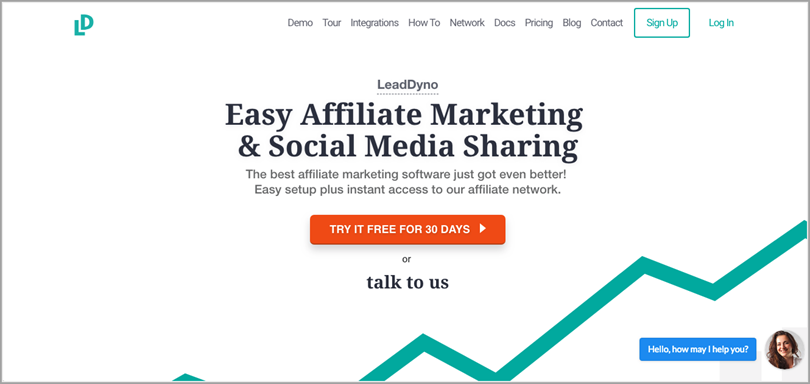
- Affiliate links. Generating a specific affiliate link for each influencer allows you to track online sales through their social media channels or blog posts. You can easily create affiliate links for your company with tools like LeadDyno:
- Promo codes. Most consumers aren’t ready to buy as soon as they learn or hear about a product. With a promo code, you can keep measuring how successful an influencer’s posts are after the initial launch.
- Google Analytics. By setting up an ‘Event’ goal in Google Analytics, you can determine which customers and how many customers visited your landing page or online store from an influencer campaign.
Influencer marketing examples
Finally, let’s look at some influencer marketing campaign examples through the four most popular social media channels for influencer marketing: Instagram, YouTube, Snapchat, and Twitter.
Instagram is an excellent platform if you have a product or brand that lends itself to a visual platform, like a clothing line or a lifestyle brand. Lifestyle bloggers can share posts that will quickly go viral.
In 2016, the brand Sperry identified micro influencers who were already sharing their products on Instagram, reached out to these people and crafted an integrated, Instagram campaign which quickly grew their brand awareness.
One example of this was with micro-influencer Slava Daniliuk who shared images on Instagram when wearing Sperry shoes with the brand hashtag, #OdysseysAwait:

YouTube
Scottish whiskey brands, Lagavulin and Oban, reached out to celebrity influencer Nick Offerman for a YouTube campaign. The video, with its simple, seasonal motif, won an award for Best Influencer Marketing campaign, and the video went viral.
Amazon’s Audible launched a YouTube influencer campaign with several YouTube celebrities in 2015. In the first half of the year, the campaign generated over 83 million hits.
If your target audience is younger, you’ll want to focus your influencer marketing campaigns on Youtube. Young consumers trust Youtube influencers more than traditional celebrities.
Snapchat
DJ Khaled, a relatively unknown musician just a few short years ago, is now a top-influencer on Snapchat. Large brands have reached out to him for ‘Snapchat Takeovers.’ In a takeover, Khaled is given the reigns of the companies’ account, growing their following in a short amount of time.
Consider utilizing this same strategy if you find an influencer for your brand on Snapchat. This will give someone who is an expert at the platform, creative freedom to help grow your brand awareness and get you a more significant following on Snapchat.
If you’re going to use an influencer on Twitter, identify or create a branded hashtag for your campaign. For example, Sprint uses the hashtag #LiveUnlimited to share their content with influencers who already embody the ethos of their #LiveUnlimited marketing campaign.

By the way, using video makes a huge difference for influencer marketing, whether on Instagram, Youtube or other platforms. Using the right tools can not only help you create fantastic videos, but also save you lots of time and money.
For example, with InVideo, you can create stunning professional-level videos in minutes with pre-made templates to match all your needs.
Navigating challenges in influencer marketing
Dealing with Influencer Fraud
One of the challenges that brands may face in influencer marketing is dealing with influencer fraud. This can involve inflated follower numbers, fake engagement, or even the use of bots. To mitigate this risk, it is crucial to conduct thorough research and due diligence before partnering with an influencer.
Managing Brand-Influencer Relationships
Building and maintaining strong relationships with influencers is vital for the success of your influencer marketing campaigns. Effective communication, transparency, and mutual respect are key elements in fostering long-term partnerships.
Regularly evaluating the performance of your influencer collaborations will help identify areas for improvement and strengthen the relationship between your brand and the influencers you work with.
Wrapping things up
Influencer marketing has grown exponentially in recent years. The old ways of marketing, although still useful, are much harder to gain substantial traction with.
But the rules of the game are always changing. As recently as 2015 Facebook had much higher organic reach. These social media giants frequently change their algorithms, and what’s working for your brand today may not work anymore tomorrow. It can be an absolute headache to keep up with the changing digital marketing landscape.
An influencer, however, already knows what’s working, and they’re more likely than you to have the means and time to keep up with any new developments.
If you want to grow your brand awareness, drive traffic to your website, and increase your conversions with influencer marketing, use the tips in this post to get started.