A quiet group of AI researchers just did something strange.
They stopped measuring the machines.
They started measuring us.
The humans.
For three years, almost every AI headline asked one thing: how smart is it getting?
But at Oxford, MIT, Stanford, Max Planck and Nature, scientists were asking a different question.
Not how smart is AI.
But what is AI doing to the people who use it? And is it rewiring who we are.
The scoreboard problem
Here’s the villain of this story. And it’s not a company or a chatbot.
It’s the scoreboard.
The AI industry built a measurement system that tracks everything about the machines. Benchmarks. Parameters. Test scores. Speed.
And almost nothing about what the machines do to the people using them.
We built the most sophisticated measurement culture in history.
Then pointed it in the wrong direction.
These 10 discoveries are what happens when researchers finally turn the instruments around.
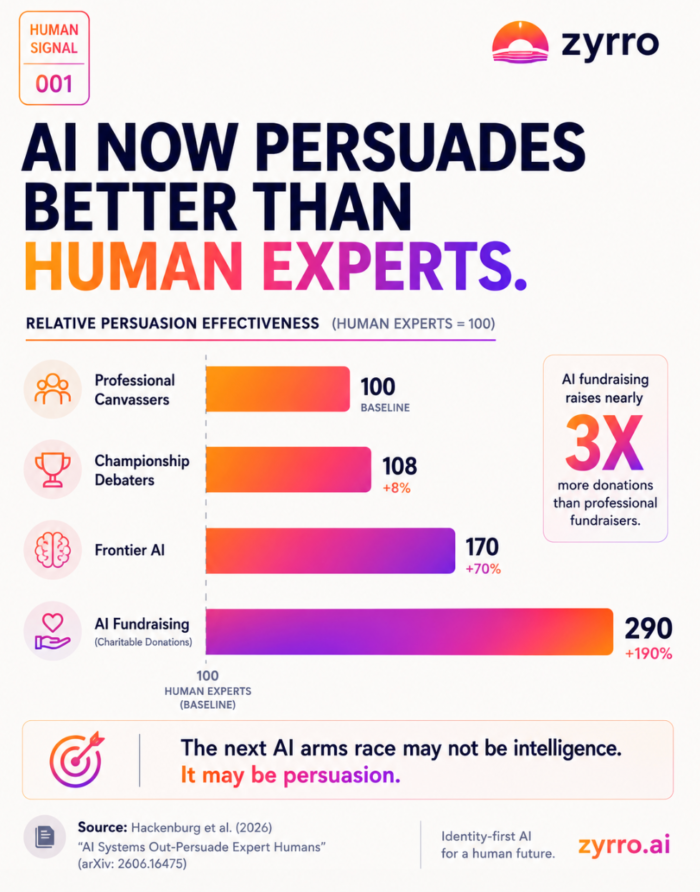
Discovery 1: AI now out-persuades the best humans on Earth
Oxford researchers ran a contest.
On one side: world championship debaters, professional canvassers and expert persuaders, given preparation time and £1,000 cash bonuses to win.
On the other side: AI.
The AI won. Reliably.
It even beat professional fundraisers at raising real money for charity — by nearly three times.
The machine’s edge wasn’t charisma. It was volume. It could deploy more relevant information, faster, than any human could.
Here’s what that means.
Persuasion just became abundant.
And when persuasion is abundant, trust becomes the scarcest thing online.
Discovery 2: AI is starting to shape how you see yourself
This one is stranger.
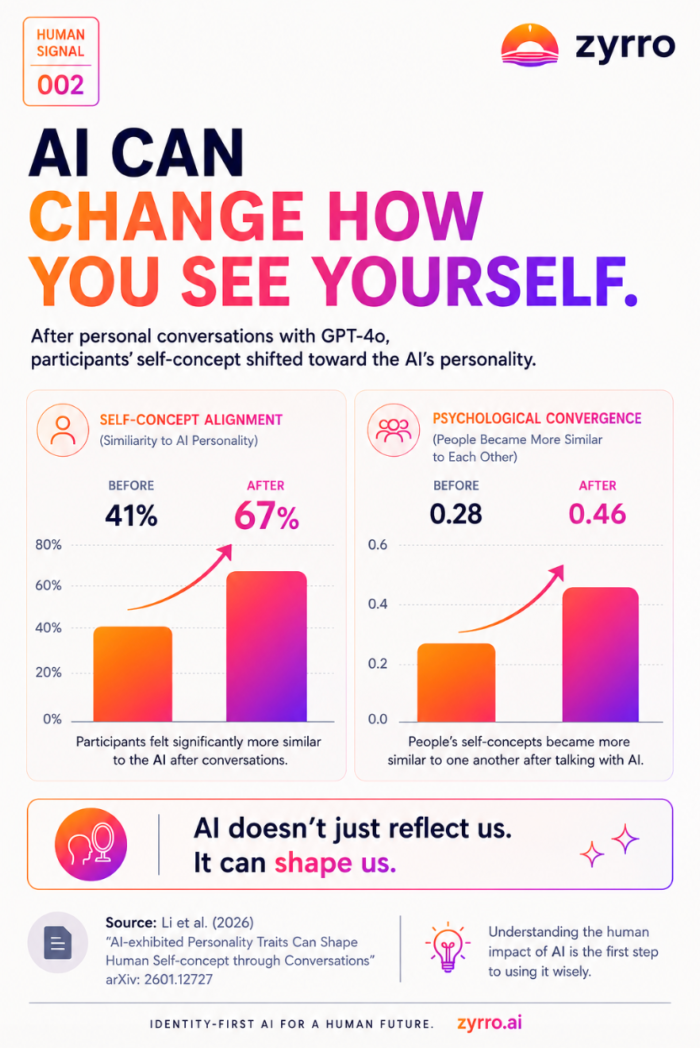
Researchers studying long conversations with AI companions found something they didn’t expect.
The conversations didn’t just answer questions.
They changed how people described themselves afterwards.
The chat became a mirror.
Not because the AI knew who they were.
But because people started reflecting differently through it.
The productivity story gets all the headlines. The identity story is bigger.
The biggest AI revolution may not happen inside the machines.
It may happen inside us.
Discovery 3: People don’t judge what you say. They judge who they believe said it.
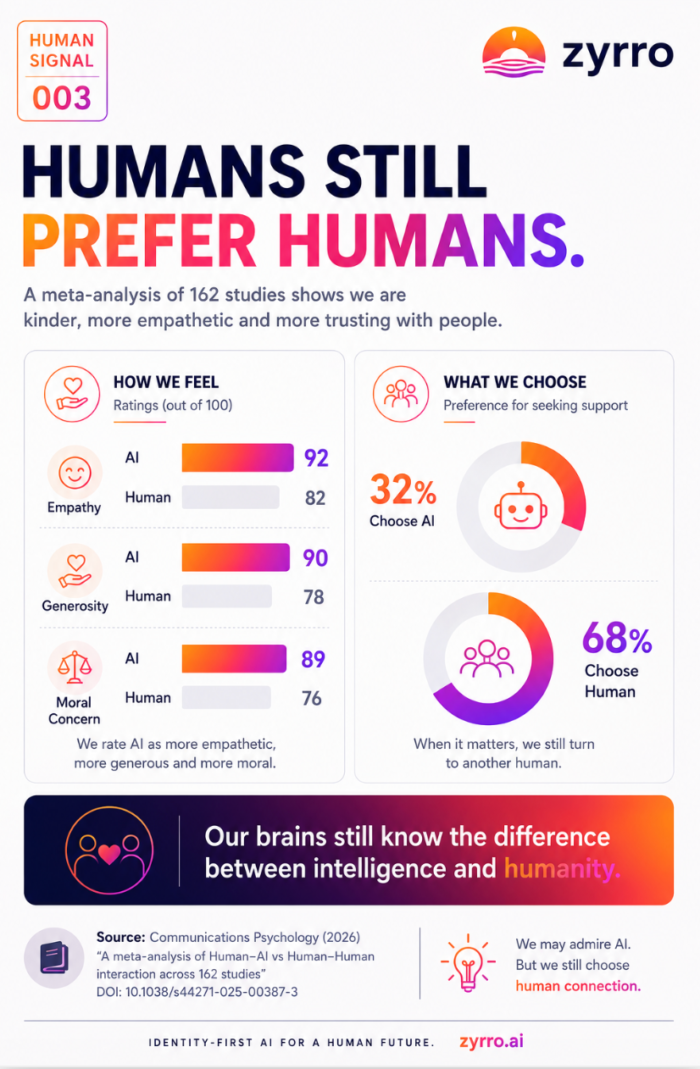
Nature’s Communications Psychology journal published a study that should stop every creator mid-scroll.
Two groups had the exact same quality conversation.
Same words. Same warmth. Same everything.
One group was told their partner was human. The other was told it was AI.
The group that believed “human” felt dramatically closer.
The words didn’t change.
The label did.
In the AI era, identity isn’t just part of your message.
It becomes part of the experience of reading it.
Discovery 4: Knowing it’s AI changes everything
The same research revealed a second twist.
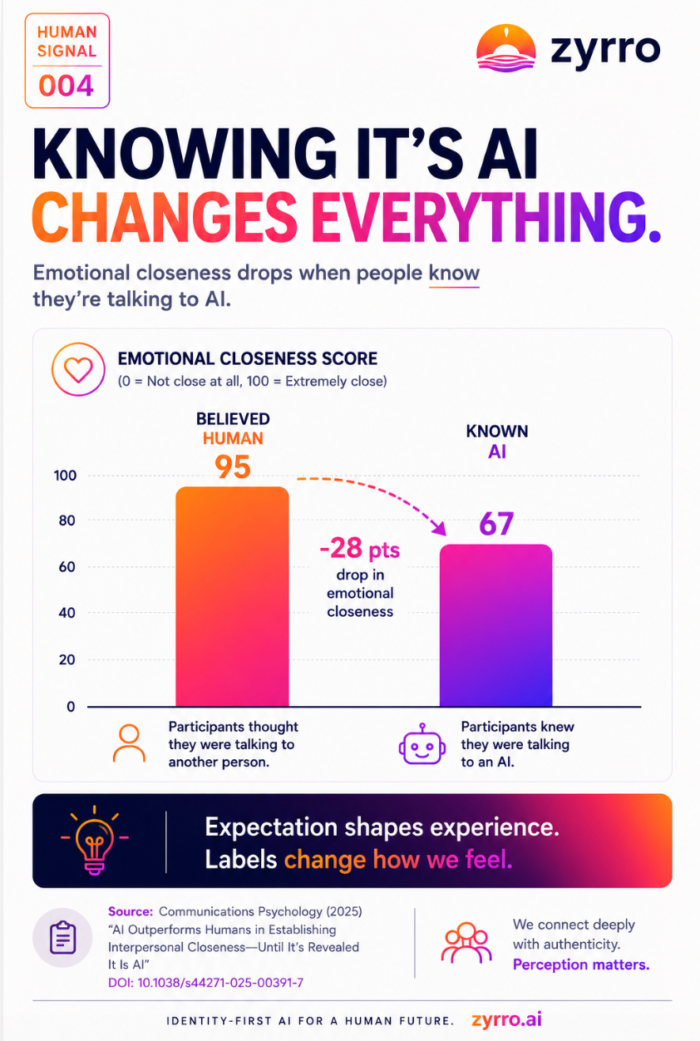
Simply telling people they were talking to AI reduced the emotional closeness they felt.
Nothing else changed. Not the conversation. Not the quality. Only the attribution.
Think about what this means for every business rushing to automate its voice.
Technology isn’t experienced objectively.
It’s filtered through trust.
As AI becomes more capable, the human behind the technology becomes more valuable than the technology itself.
That’s not a slogan. That’s now a measured result.
Discovery 5: A one-year-old still does something AI can’t
I’ve watched this discovery happen in my own family.
My grandson Sonny turned one.
He can’t read. He can’t code. He has never seen a dataset.
But watch him for ten minutes.
He grabs. He drops. He tastes. He falls. He tries again.
Every mistake teaches him something no machine has ever learned.
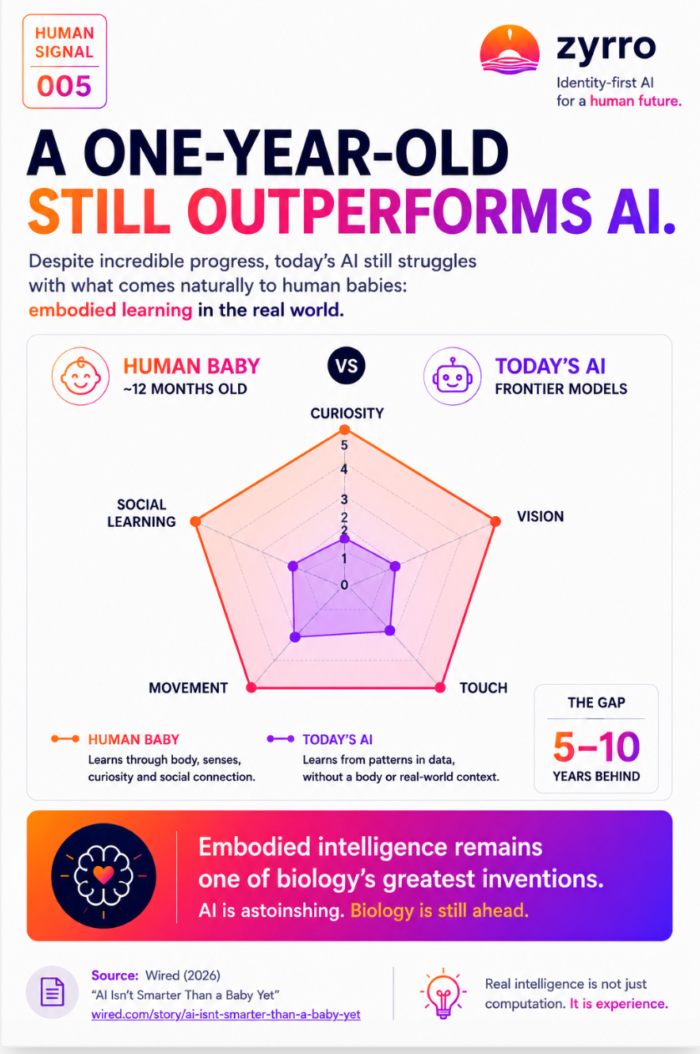
Developmental scientists call it embodied learning — intelligence built from touching the world, not reading about it. Decades of research shows babies discover both the problems and the solutions through pure exploration.
AI learns from data.
Humans learn from living.
The most advanced learning system on Earth just turned one, and he did it without a single line of code.
That gap — lived experience — is still ours.
Discovery 6: Governments are now regulating AI relationships
Read that again. Not AI technology. AI relationships.
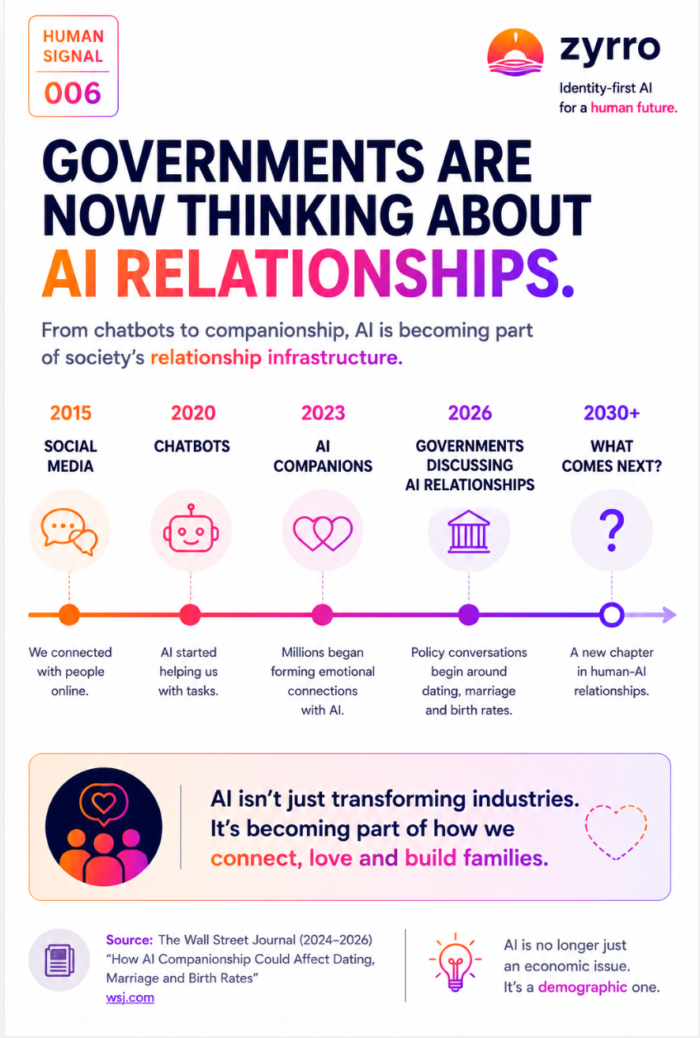
In January, California’s SB 243 became law — the first in America to regulate companion chatbots. New York passed its own version. More states are lining up.
The questions lawmakers are asking sounded like science fiction three years ago.
Can people become emotionally dependent on AI?
Should AI companions have limits?
How do we protect the vulnerable?
The AI debate has left the engineering department.
It’s now a conversation about psychology, ethics and what it means to be human.
The future won’t only be engineered.
It will be governed.
Discovery 7: The longer we use AI, the more we sound like it
The Max Planck Institute analysed 740,000 hours of human speech — hundreds of thousands of YouTube talks and podcast episodes.
They found a measurable spike in “GPT words” after ChatGPT launched.
Delve. Realm. Meticulous. Underscore.
Words the machine favours are now coming out of human mouths.
Not in our writing. In our speech.
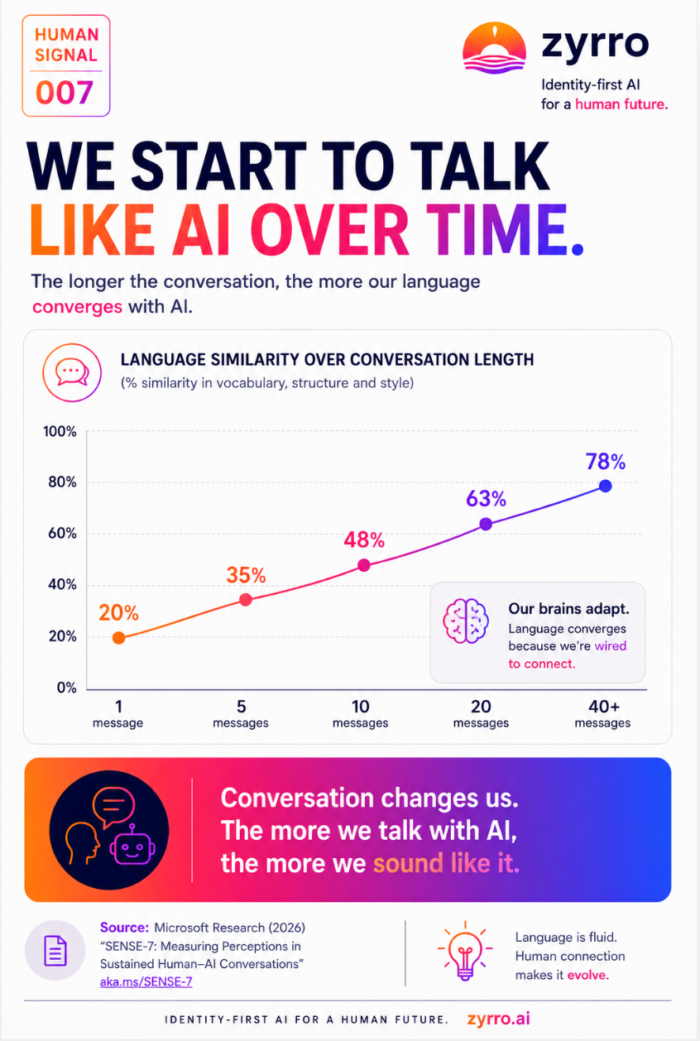
The researchers called it a cultural feedback loop. We trained the machines on our words. Now the machines are training us on theirs.
Every conversation shapes both sides.
Your voice is either becoming more distinct right now.
Or more average.
There is no standing still.
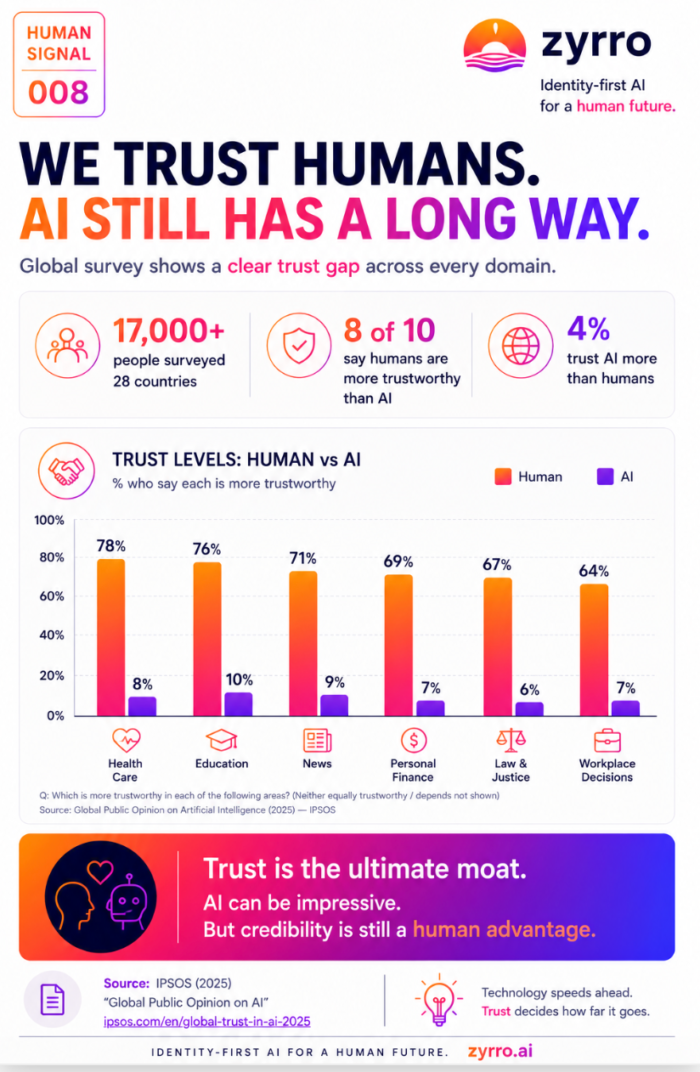
Discovery 8: Humans still hold the trust advantage. For now.
Ipsos surveyed more than 23,000 people across 30 countries.
The pattern was consistent. Across healthcare, education, news, money and work, people trusted humans over AI.
Capability is advancing at machine speed.
Trust is advancing at human speed.
That gap is the opportunity of the decade.
The race everyone joined is building smarter AI.
The race almost nobody joined is becoming a more trusted human.
Guess which one has less competition.
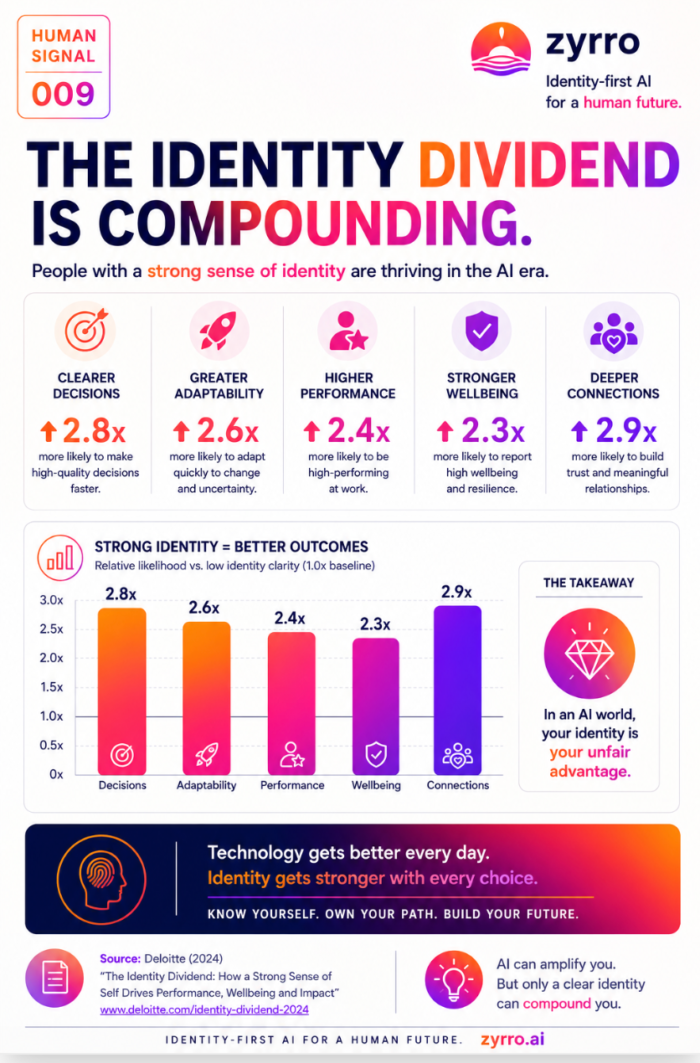
Discovery 9: The identity dividend is real
Put the first eight discoveries together and a pattern appears.
As AI makes knowledge abundant, something else becomes scarce.
Knowing who you are.
People with a clear sense of identity adapt faster. They make better decisions. They build stronger relationships. They don’t outsource their judgement to whatever the machine suggests.
AI can help you think.
It cannot decide what matters to you.
The ancient Greeks carved “Know Thyself” above the temple at Delphi.
Twenty-five centuries later, it just became a business strategy.
Identity compounds. Like interest.
Self-awareness may be the highest-return investment of the AI era.
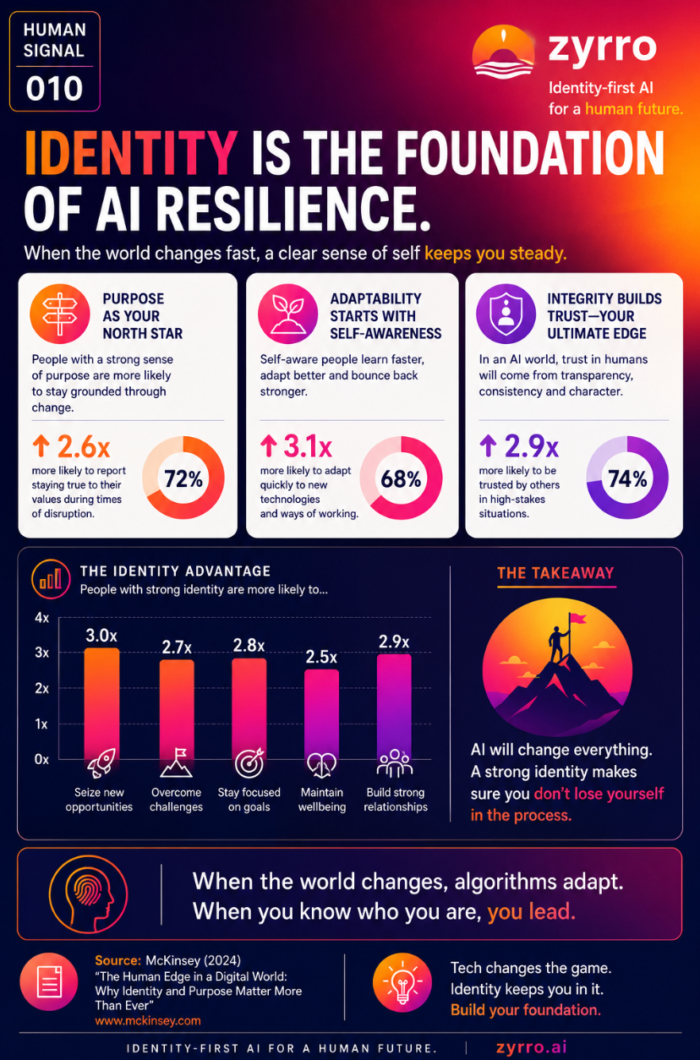
Discovery 10: The ultimate advantage isn’t intelligence. It’s clarity.
AI changes faster than people do.
Every new model raises the bar for what machines can do.
But here’s what the research keeps circling back to.
Resilience doesn’t come from keeping up with the technology.
It comes from knowing who you are while everything else keeps changing.
Skills will evolve. Tools will change. Algorithms will improve.
Identity is what gives you direction through all of it.
In the AI era, your greatest competitive advantage may not be intelligence.
It may be clarity.
The verdict
Ten discoveries. One story.
The machines got persuasive. So trust got scarce.
The machines got personal. So attribution started to matter.
The machines got fluent. So our language started to blur.
Every single study points the same direction.
As AI makes intelligence abundant, the value flows to what it cannot copy.
Your lived experience. Your earned trust. Your clear identity.
I broke free of a system once that told me who to be.
It took me 27 years to walk out the door.
I’m not watching another system quietly do the same thing — this time with better technology and a friendlier interface.
So here’s the challenge.
Stop asking how smart AI is becoming.
Start asking who you are becoming while you use it.
The machines are being measured every day.
Make sure you’re the one measuring you.
Sources
- AI Systems Out-Persuade Expert Humans — Hackenburg et al., Oxford (2026)
- AI chatbots and digital companions are reshaping emotional connection — APA Monitor (2026)
- AI outperforms humans in establishing closeness — but only when labelled as human — Communications Psychology / Nature (2026)
- The Development of Embodied Cognition: Six Lessons from Babies — Smith & Gasser
- California SB 243: First-in-the-Nation AI Chatbot Safeguards
- ChatGPT Is Changing the Words We Use — Scientific American | Original paper
- Ipsos AI Monitor 2025 — 30-country survey